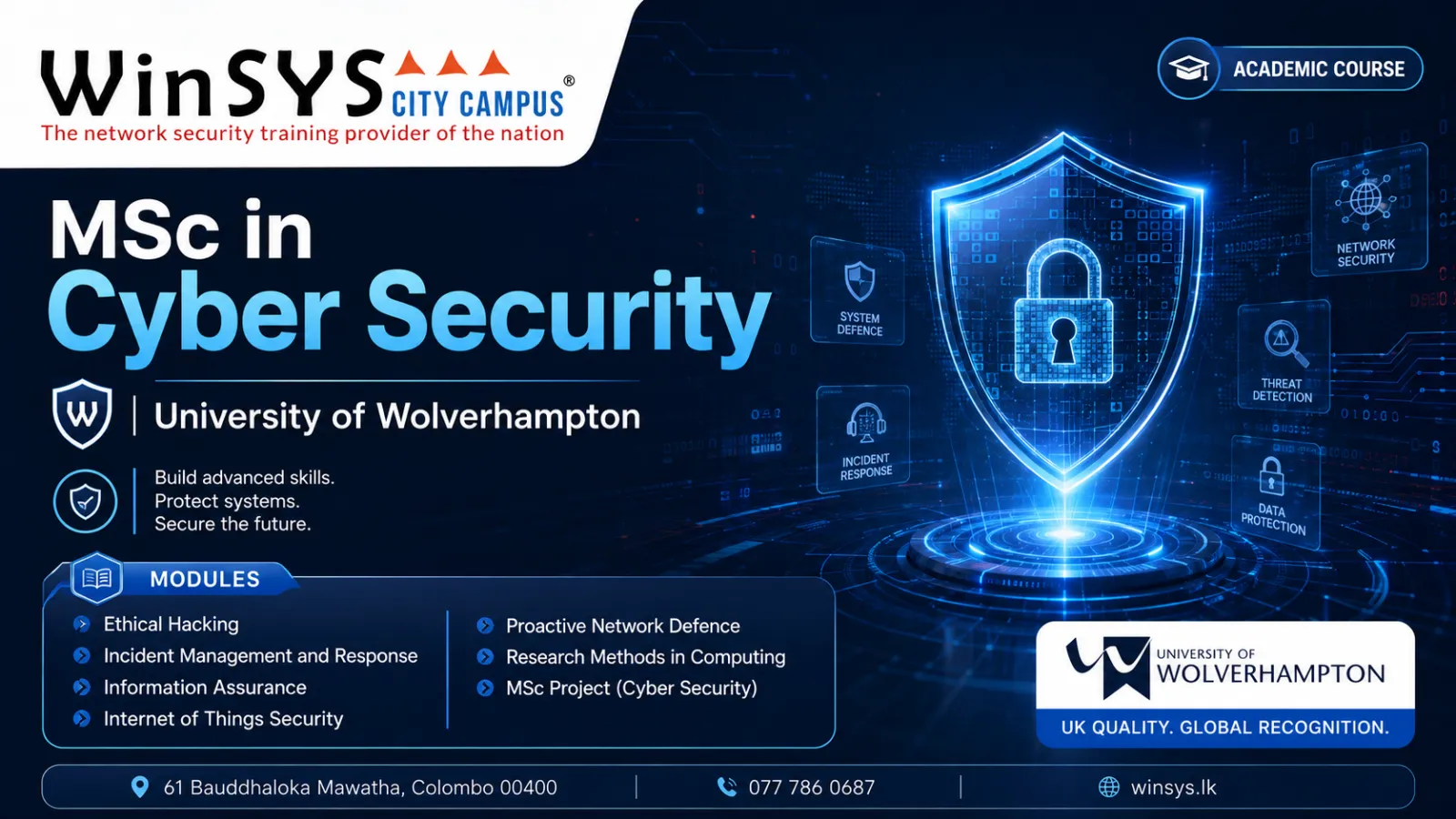
The MSc in Cyber Security is an advanced postgraduate programme designed for graduates and IT professionals seeking specialist knowledge in cyber defence, digital security, and information assurance. The programme equips students with the technical expertise and strategic understanding required to protect organisations from increasingly sophisticated cyber threats.
Throughout the programme, students explore ethical hacking, incident management, proactive network defence, information assurance, Internet of Things (IoT) security, and research methodologies. The curriculum combines academic knowledge with practical application through real-world case studies, hands-on laboratory exercises, security assessments, and research-based learning.
Graduates will develop the ability to identify vulnerabilities, respond to cyber incidents, implement effective security controls, and evaluate emerging technologies from a security perspective. The programme also strengthens critical thinking, analytical, and research skills essential for senior cyber security roles.
Upon successful completion, graduates will be well prepared for leadership positions within the cyber security industry or to pursue further professional certifications and doctoral-level research.
Modules
⚪Ethical Hacking
⚪Incident Management and Response
⚪Information Assurance
⚪Internet of Things Security
⚪Proactive Network Defence
⚪Research Methods in Computing
Learning outcomes
Upon successful completion of the programme, graduates will be able to:
* Understand advanced cyber security principles, governance frameworks, and organisational security strategies.
* Analyse complex cyber threats and emerging attack techniques affecting modern digital infrastructures.
* Design secure network architectures using industry-recognised security standards and best practices.
* Implement ethical hacking methodologies to identify and mitigate security vulnerabilities.
* Evaluate information assurance frameworks to ensure regulatory compliance and data protection.
* Develop proactive defence strategies using threat intelligence and security monitoring solutions.
* Investigate and manage cyber security incidents using recognised incident response procedures.
* Assess security risks associated with cloud computing, IoT devices, and emerging technologies.
* Conduct independent research using appropriate research methodologies and critical analysis techniques.
* Produce professional reports and evidence-based recommendations to improve organisational cyber resilience.
Eligibility & entry requirements
Entry Requirements
Applicants should normally possess one of the following:
1. A recognised Bachelor's degree in Computing, Information Technology, Cyber Security, Software Engineering, Computer Science, or a related discipline.
2. An equivalent international qualification recognised by the awarding university.
3. Applicants with relevant industry experience and professional qualifications may be considered subject to the university's admissions policy.
4. Evidence of English language proficiency where applicable.
View the official Qualifi specification ↗
📈 Career outcomes
🚀 Your career pathway
Where the Cyber Security route can take you — from here to a degree and a career.
Possible career roles
🌍 Opportunities in: Sri Lanka · UK · Middle East