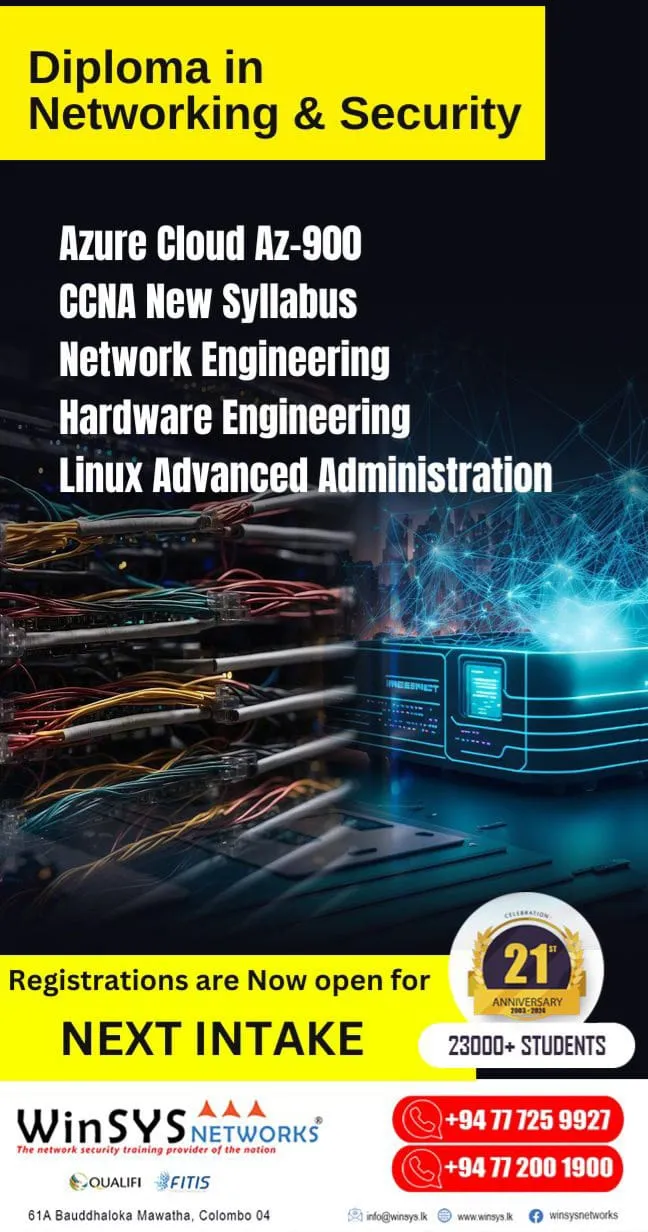
 The Diploma in Networking and Security is a practical, industry-oriented programme designed to develop the essential knowledge and technical skills required for today's IT infrastructure and cybersecurity environments. The course covers computer hardware, network engineering, Cisco CCNA, Linux administration, and Microsoft Azure cloud fundamentals, enabling learners to install, configure, manage, and troubleshoot computer systems and enterprise networks.
Through a combination of theoretical learning and extensive hands-on practical sessions, students gain experience in network configuration, server administration, cloud services, operating systems, hardware maintenance, and network security best practices. The programme is aligned with current industry standards and prepares learners to support, secure, and maintain modern IT environments.
Upon successful completion, graduates will be equipped for entry-level careers in network administration, IT support, systems administration, and cloud support, while also building a strong foundation for internationally recognised professional certifications and further studies in networking, cybersecurity, and information technology.
Learning outcomes
CCNA (Cisco Certified Network Associate)
Upon successful completion of this module, learners will be able to:
Explain networking fundamentals, IP addressing, and network protocols.
Configure and troubleshoot Cisco routers and switches.
Design, implement, and manage LAN and WAN infrastructures.
Configure VLANs, inter-VLAN routing, static and dynamic routing protocols.
Implement network security features and infrastructure services.
Configure and manage IPv4 and IPv6 networks.
Monitor, maintain, and troubleshoot enterprise network environments.
Apply industry best practices in network administration using Cisco technologies.
Microsoft Azure AZ-900 (Microsoft Azure Fundamentals)
Upon successful completion of this module, learners will be able to:
Explain cloud computing concepts, deployment models, and service models.
Identify Microsoft Azure architecture, regions, and core infrastructure components.
Deploy and manage Azure virtual machines, storage, and networking resources.
Configure Azure identity and access management using Microsoft Entra ID.
Apply Azure security, governance, compliance, and monitoring solutions.
Estimate cloud costs using Azure pricing and cost management tools.
Monitor Azure resources using Azure Monitor and Service Health.
Perform basic Azure administrative tasks using the Azure Portal, Cloud Shell, CLI, and PowerShell.
Azure AZ-900 Practical Labs
Upon successful completion of the practical sessions, learners will be able to:
Create and manage Azure subscriptions and resource groups.
Deploy Azure virtual machines and networking services.
Configure virtual networks, subnets, and storage accounts.
Implement Role-Based Access Control (RBAC).
Apply Azure governance using resource tags and Azure Policy.
Monitor cloud resources using Azure Monitor and Service Health.
Estimate cloud infrastructure costs using Azure Pricing Calculator.
Gain practical experience in deploying and managing Azure cloud services.
Linux Advanced Administration
Upon successful completion of this module, learners will be able to:
Install and configure Linux operating systems.
Perform advanced Linux system administration tasks.
Manage users, groups, permissions, and security policies.
Configure software packages and system services.
Create and execute Bash shell scripts for automation.
Monitor and optimize Linux system performance.
Configure Linux networking and integrate Linux with enterprise environments.
Implement automated deployment methods including PXE installations.
Troubleshoot Linux operating systems and server environments.
Network Engineering
Upon successful completion of this module, learners will be able to:
Understand modern networking technologies and network architectures.
Design and implement enterprise network infrastructures.
Install and configure Windows Server services.
Configure Active Directory Domain Services (ADDS).
Deploy DHCP, DNS, IIS, WDS, and Hyper-V services.
Configure routing, remote access, proxy servers, and email servers.
Implement TCP/IP networking and troubleshoot connectivity issues.
Install and manage Linux servers in mixed network environments.
Configure firewall and network security solutions.
Perform structured network cabling and network maintenance.
Hardware Engineering
Upon successful completion of this module, learners will be able to:
Identify computer hardware components and peripheral devices.
Assemble, upgrade, and maintain desktop computer systems.
Diagnose and troubleshoot hardware faults.
Install and configure Windows, Windows Server, and Linux operating systems.
Perform disk management and software installation procedures.
Install hardware drivers, application software, and antivirus solutions.
Configure basic computer networking and file sharing.
Set up remote desktop connections and printer sharing.
Perform preventive maintenance and hardware servicing.
Apply industry best practices in computer repair and technical support.
Overall Programme Learning Outcomes
Upon successful completion of the programme, graduates will be able to:
Design, configure, and troubleshoot modern computer networks using industry-standard technologies.
Install, configure, and administer Windows, Linux, and cloud-based infrastructures.
Deploy and manage Microsoft Azure cloud services and virtual environments.
Perform hardware installation, maintenance, and troubleshooting for enterprise computer systems.
Implement network security, user management, and access control mechanisms.
Diagnose and resolve hardware, software, networking, and operating system issues efficiently.
Apply professional standards, technical documentation, and industry best practices in IT support and systems administration.
Demonstrate practical skills required for careers in Network Administration, Systems Administration, Cloud Computing, Technical Support, and IT Infrastructure Management.
Eligibility & entry requirements
Students above 15 years old can join
View the official Qualifi specification ↗
📈 Career outcomes
🚀 Your career pathway
Where the Networking route can take you — from here to a degree and a career.
Possible career roles
🌍 Opportunities in: Sri Lanka · UK · Middle East