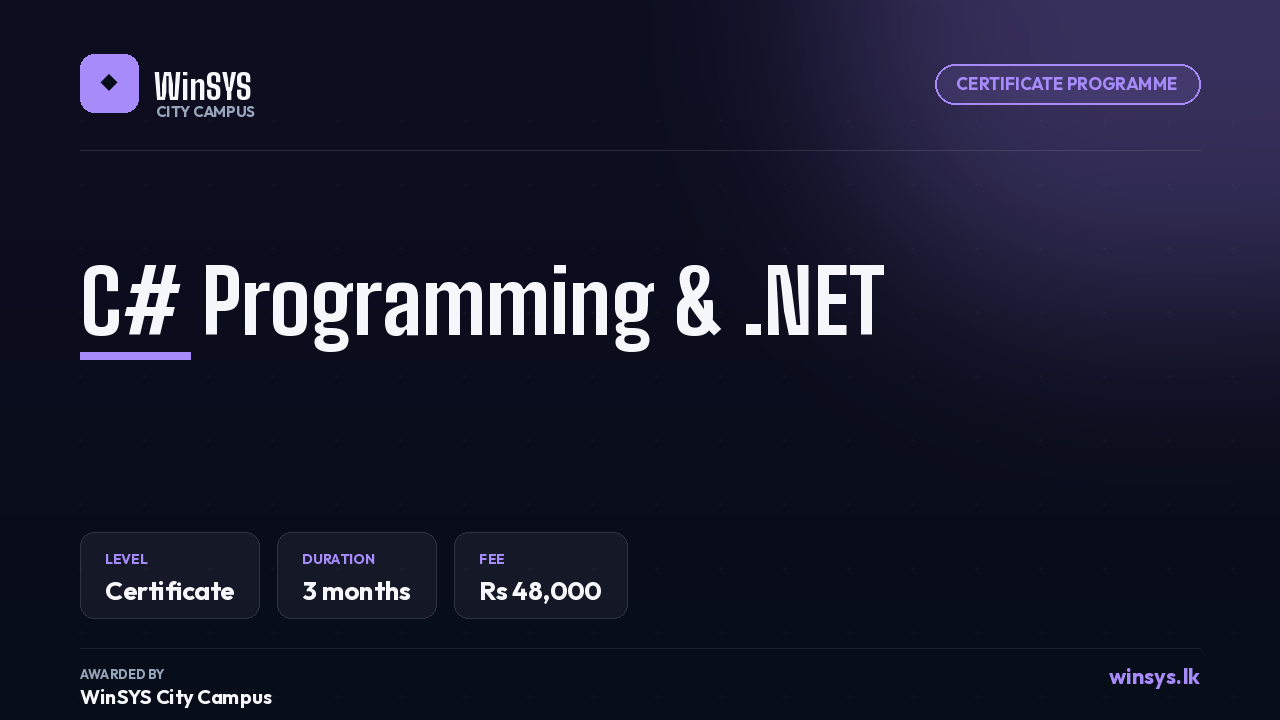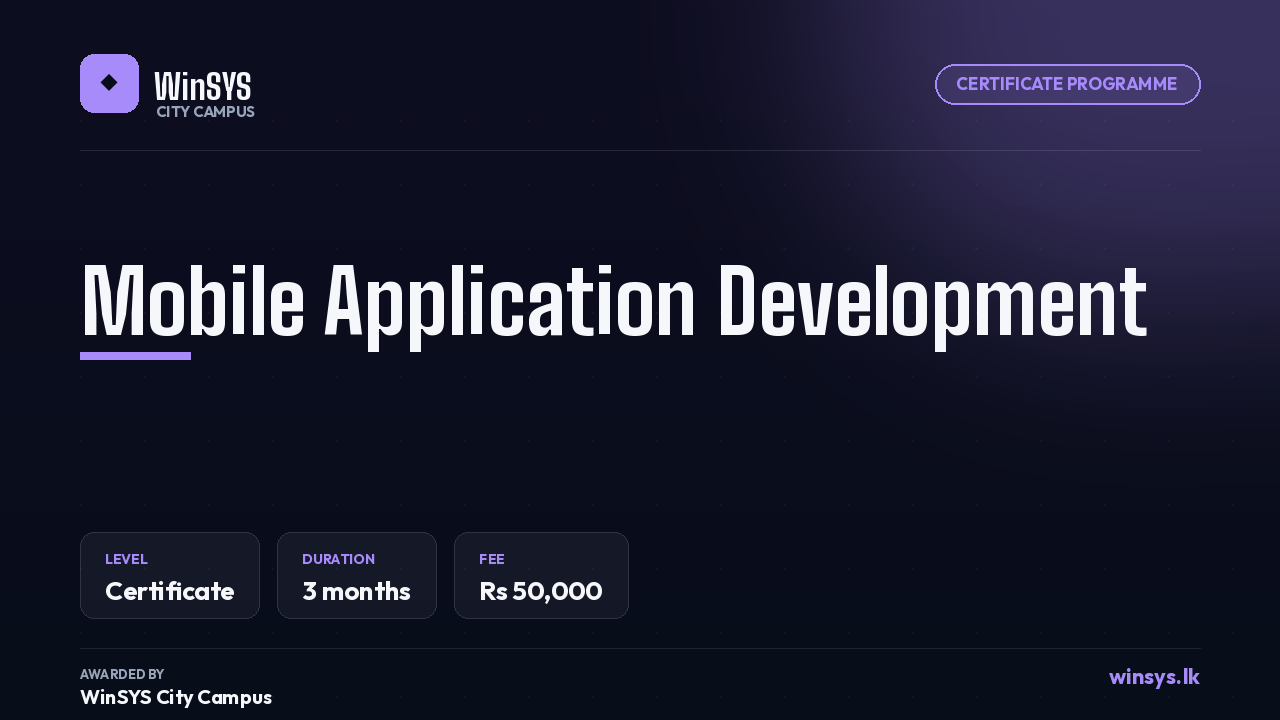
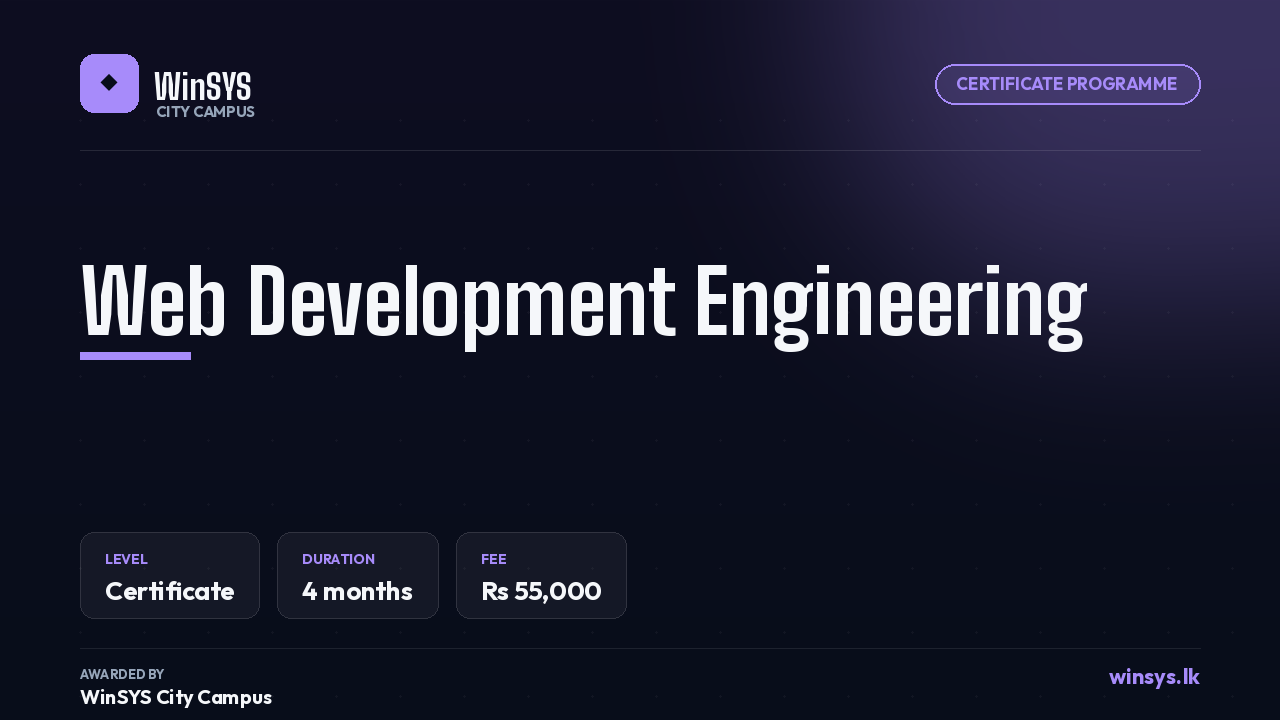
The Certificate in Web Development is designed to provide students with the essential knowledge and practical skills required to design, develop, and maintain dynamic and interactive websites using modern web technologies. This programme introduces the fundamentals of web development, covering both client-side and server-side programming.
Throughout the course, students will learn HTML5 for website structure, CSS for styling and page design, JavaScript for client-side programming, and PHP for server-side development. The programme also covers MySQL database design, PHP and MySQL integration, AJAX technologies, and dynamic web page development.
Additionally, students will gain an understanding of Web 2.0 and Web 3.0 concepts, social media integration, Search Engine Optimisation (SEO), and User Interface (UI) and User Experience (UX) design principles.
The course emphasises hands-on practical learning through website development exercises, database projects, and individual project work. Students will develop the ability to create responsive, interactive, and database-driven websites.
Upon successful completion, students will have the foundational technical skills required to pursue further studies and entry-level career opportunities in web development, website design, and software development.
Learning outcomes
Module 01: Introduction to the Internet and World Wide Web
Introduction to the Internet
Understanding the World Wide Web (WWW)
How Websites and Web Browsers Work
Introduction to Web Servers
Domain Names and Web Hosting
Basics of Web Development
Module 02: Static Web Publishing and Design (HTML5)
Introduction to HTML5
HTML Document Structure
HTML Elements and Attributes
Headings, Paragraphs and Text Formatting
Creating Hyperlinks
Working with Images and Multimedia
Creating Tables and Forms
Designing Static Web Pages
Publishing Websites
Module 03: CSS – Styling and Designing Web Pages
Introduction to Cascading Style Sheets (CSS)
CSS Syntax and Selectors
Applying CSS to HTML Documents
Colours, Fonts and Text Styling
Backgrounds and Borders
CSS Box Model
Margins and Padding
Page Layout and Positioning
Basic Responsive Web Design
Module 04: Client-Side Web Programming Using JavaScript
Introduction to JavaScript
JavaScript Variables and Data Types
Operators and Expressions
Conditional Statements
Loops and Functions
JavaScript Events
DOM Manipulation
Form Validation
Creating Interactive Web Pages
Module 05: Server-Side Web Programming Using PHP
Introduction to PHP
PHP Syntax and Variables
Data Types and Operators
Conditional Statements and Loops
PHP Functions
Working with Forms
Handling GET and POST Methods
Session and Cookie Management
File Handling
Dynamic Web Development Using PHP
Module 06: Database Designing Using MySQL
Introduction to Database Management Systems
Introduction to MySQL
Database Creation and Management
Tables, Fields and Data Types
Primary and Foreign Keys
SQL Queries
INSERT, SELECT, UPDATE and DELETE Operations
Database Relationships
Database Design Fundamentals
Module 07: Server-Side Integration of PHP and MySQL
Connecting PHP with MySQL
Database Connection Configuration
Retrieving Data from Databases
Inserting and Updating Records
Deleting Database Records
Displaying Database Information on Web Pages
User Registration and Login Systems
Database-Driven Web Applications
Module 08: AJAX for Fast and Dynamic Web Pages
Introduction to AJAX
Understanding Asynchronous Web Communication
JavaScript and AJAX Integration
Sending and Receiving Server Requests
Retrieving Data Without Reloading Web Pages
PHP and AJAX Integration
Dynamic Web Page Development
Module 09: Web 2.0, Web 3.0, Social Media Integration and SEO
Introduction to Web 2.0 Concepts
Introduction to Web 3.0 Concepts
Social Media Integration
Search Engine Optimisation (SEO) Fundamentals
On-Page SEO Techniques
Website Search Visibility
Social Media Sharing and Integration
Module 10: User Interface (UI) and User Experience (UX) Design
Introduction to UI and UX Design
Principles of User-Centred Design
Website Layout and Navigation
Website Usability
Typography and Colour Selection
Wireframing and Prototyping Fundamentals
Improving Website User Experience
Module 11: Web Development Project
Project Planning and Requirements
Website Structure and Design
Front-End Development Using HTML, CSS and JavaScript
Back-End Development Using PHP
MySQL Database Integration
Website Testing and Debugging
Project Implementation and Presentation
Eligibility & entry requirements
Entry Requirements – Certificate in Web Development
Applicants should be at least 12 years of age.
Basic computer literacy and familiarity with using computers.
Basic understanding of internet browsing and computer applications is an advantage.
An interest in website design, programming, and software development.
Basic English language reading skills to understand programming instructions.
Ability to understand and follow technical instructions.
No previous programming or web development experience is required. Beginners, school students, school leavers, and individuals interested in learning website development are welcome to enrol.
🚀 Your career pathway
Where the Software Engineering route can take you — from here to a degree and a career.
Possible career roles
🌍 Opportunities in: Sri Lanka · UK · Middle East